
Top Destinations
Travelers' Choice


Beyond Expeditions. Beyond Business.
Beyond Imagination.
Top Destinations
Travelers' Choice
Beyond Expeditions. Beyond Business.
Beyond Imagination.
Beyond Expeditions. Beyond Business.
Beyond Imagination.
Beyond Expeditions. Beyond Business.
Beyond Imagination.
Punakha, once the ancient capital of Bhutan, is a warm and fertile valley known for its rich history, majestic rivers, and terraced rice fields. Nestled at a lower altitude, it enjoys a subtropical climate, making it ideal for farming and winter retreats. At its heart lies the stunning Punakha Dzong, a symbol of Bhutanese unity and spiritual heritage. With its lush landscapes and deep cultural roots, Punakha remains one of the most beautiful and significant districts in the country.
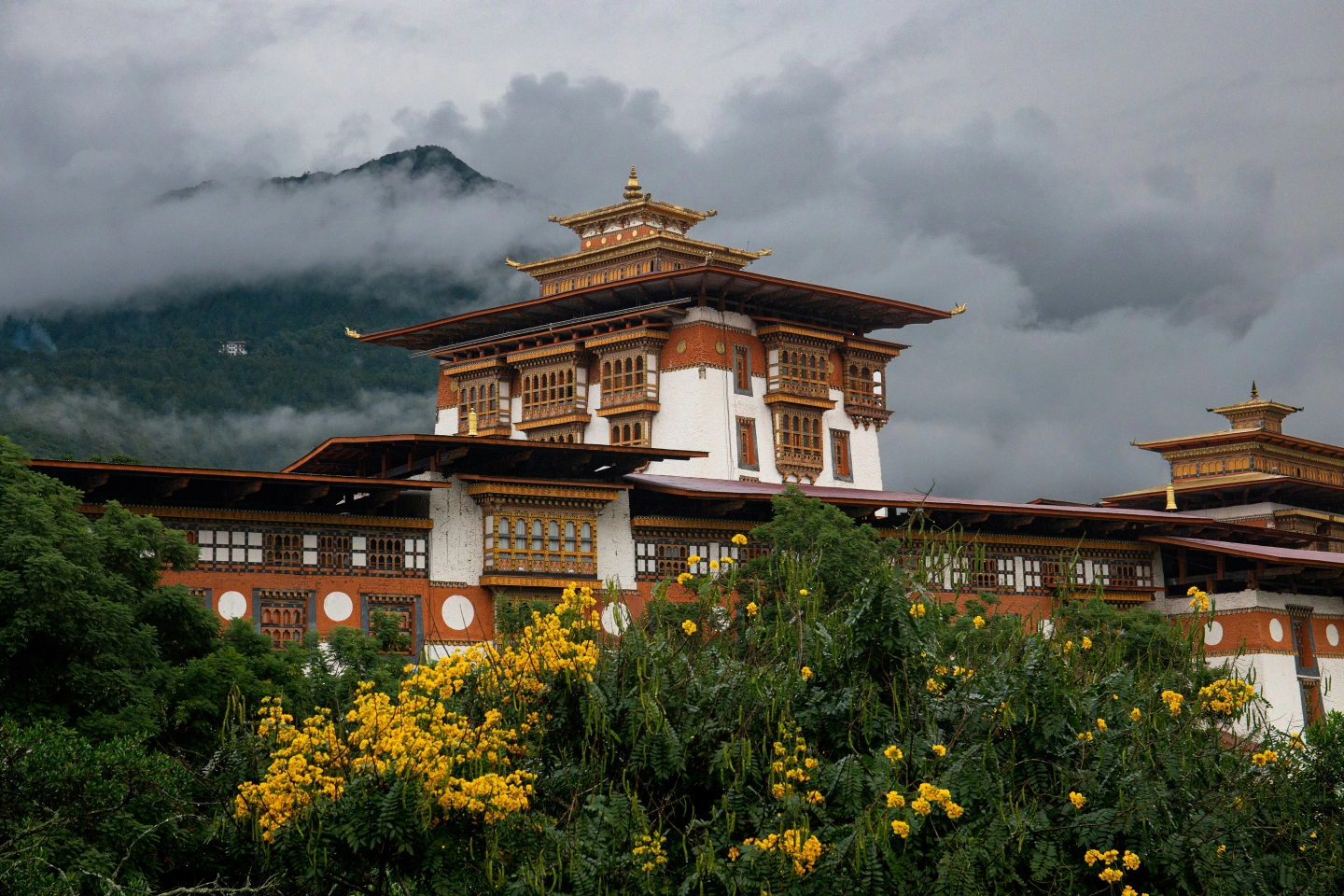
Punakha Dzong: Where Rivers Meet and History Breathes
Where Rivers Embrace, Legends Unfold, and Festivals Bloom. Every spring in Bhutan, as the purple jacaranda trees burst into bloom and the snowmelt rivers rush with new life, Punakha Dzong transforms into a stage of spiritual spectacle and cultural joy. Known as the Palace of Great Bliss, this 17th-century fortress is not just a monument—but the beating heart.
A fortress standing magically between two giant rivers, the Pho Chhu (Male River) and Mo Chhu (Female River) converge in Bhutan’s verdant Punakha Valley, Punakha Dzong — formally known as Pungthang Dechen Photrang (Palace of Great Bliss) — is a symbol of both heritage and harmony, offering visitors one of the richest and most layered cultural experiences in Bhutan.
Punakha dzong was constructed in 1637-38 under the direction of Ngawang Namgyal as part of his unification of Bhutan, Punakha Dzong is the country’s second-oldest and second-largest dzong. It served as the seat of Bhutan’s government until the mid-1950s, making it a centre of both religious and political power. Inside its hallowed walls lie some of the nation’s most sacred relics — including a self-arisen image of Avalokiteśvara (Rangjung Kharsapani), and the embalmed remains of Zhabdrung himself and the great tertön Pema Lingpa.
This is where the sacred Raven Crown was first placed on the head of Bhutan’s first king in 1907, marking the birth of monarchy. Even today, the dzong hosts royal weddings and national ceremonies, holding within its towering walls the pulse of the kingdom’s past and present.
During spring, the Punakha valley bursts into purple with blooming jacaranda trees, draping the dzong in blossoms—a sight so delicate it feels like a painting. The wooden cantilever bridge leading into the dzong groans gently under your footsteps, as if carrying you through centuries.
Inside, silence reigns, broken only by the low murmur of monks chanting or the rustling of prayer flags in the breeze. Its intricate murals and massive courtyards whisper stories of courage, compassion, and the enduring soul of Bhutan.
Punakha Dzong is more than a landmark—it is the beating heart of Bhutanese identity.

Standing firmly on verdant ridge overlooking the majestic Punakha Valley, the Khamsum Yulley Namgyal Chorten is a striking blend of spiritual purpose, architectural finesse, and scenic beauty.
This chorten was commissioned by Ashi Tshering Yangdon Wangchuck (the Queen Mother of Bhutan) and completed its construction in 2004.
Unlike many monasteries that serve primarily as places of worship or monastic residence, this chorten was built with a clear spiritual mission: to promote peace, harmony and protection for Bhutan and all sentient beings.
Local guidance describes its construction as being based on religious scriptures instead of modern engineering manuals — underscoring the symbolic, rather than merely structural, importance of the site.
It lies above the Mo Chhu River valley, the chorten is three‑to‑four stories high and richly decorated with Bhutanese iconography: vibrant murals, statues of protective deities (particularly the wrathful deity Vajrakilaya), yab‑yum figures, and traditional woodwork and carvings.
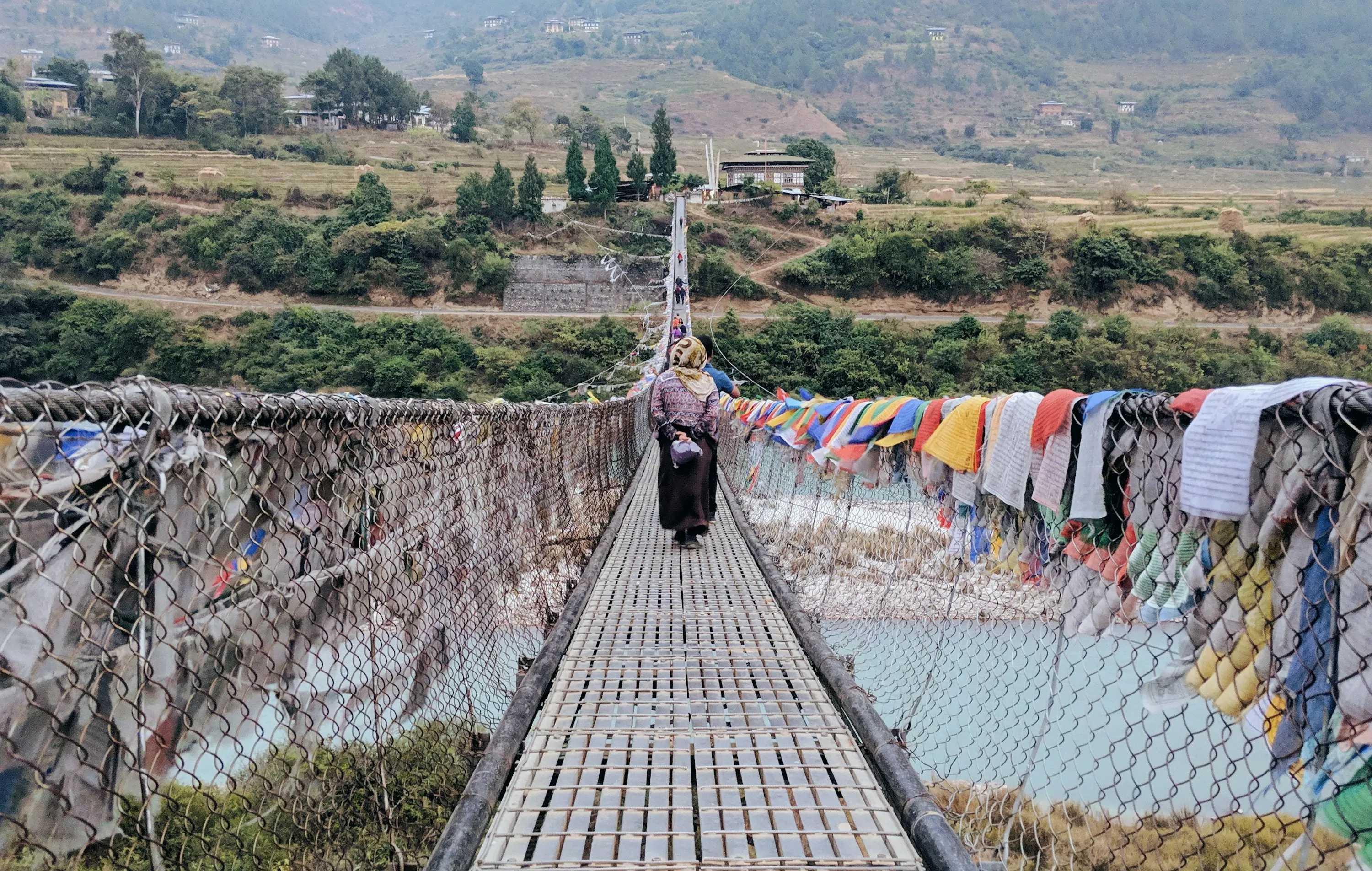
A Hanging Marvel in Bhutan’s Landscape
The Punakha Suspension Bridge spans the turbulent waters of the Pho Chhu (also called Po Chhu) near the town of Punakha in western Bhutan. Known locally as one of the country’s longest hanging pedestrian bridges, it stretches around 160-180 metres in length.
The bridge is adorned with colourful Buddhist prayer flags fluttering in the wind, adding to its spiritual ambience. Walking across, you’ll feel the valley’s energy: wind, wood planks beneath your feet, rushing river beneath. It links traditional villages across the river to Punakha town and fortress area; it is both a practical crossing and a symbolic one, connecting communities and heritage
In Bhutan, infrastructure often blends with spirituality and nature — the Punakha Suspension Bridge is a fine example. It’s not just a crossing: it’s a vantage point over one of Bhutan’s iconic valleys, and a cultural marker linking landscape, craft, and daily life. For travellers, it offers a tactile experience of Bhutan’s terrain and viewpoint often missed by panoramic look-outs alone.

Tucked away in the fertile valleys of Punakha, surrounded by golden rice fields and framed by rolling hills, stands Chimi Lhakhang, a temple unlike any other in Bhutan. Also known as the “Fertility Temple,” this sacred monastery is deeply connected to the legacy of the saint and poet Drukpa Kunley, fondly remembered as the “Divine Madman.” A visit here is not merely a tour, it’s an immersion into Bhutan’s most enchanting blend of spirituality, fertility rituals, folklore, and humor.
A Temple Born of Legend
Chimi Lhakhang was built in 1499 by Ngawang Chogyel, the 14th Drukpa hierarch, on a site blessed by Drukpa Kunley himself. According to folklore, Kunley subdued a female demon here and marked the spot with a chorten (stupa), ushering in protection and prosperity for the region.
But what truly sets this temple apart is Drukpa Kunley’s unconventional methods: using humor, songs, and a symbolic wooden phallus, his famed “Thunderbolt of Wisdom” — to teach profound Buddhist lessons. His approach gave rise to a legacy that continues to shape the region today, inspiring murals, legends, and even architecture.
A Sacred Pilgrimage for Fertility
For centuries, couples from Bhutan and around the world have journeyed to Chimi Lhakhang seeking blessings to conceive. Inside the temple, monks perform a special fertility ritual using a wooden phallus relic, believed to bestow the gift of children and protection from evil spirits.
The surrounding village, Sopsokha, is dotted with colorful, whimsical paintings and wooden carvings of phalluses — symbols of fertility, power, and spiritual cleansing. Far from taboo, these emblems are embraced here with pride and reverence.