
Top Destinations
Travelers' Choice


Beyond Expeditions. Beyond Business.
Beyond Imagination.
Top Destinations
Travelers' Choice
Beyond Expeditions. Beyond Business.
Beyond Imagination.
Beyond Expeditions. Beyond Business.
Beyond Imagination.
Beyond Expeditions. Beyond Business.
Beyond Imagination.
Paro is a gorgeous valley in western Bhutan, where emerald rice fields, winding rivers, and snow-capped peaks create a landscape straight out of a painting. Rich in history and culture, it is home to over 150 temples and monasteries, including the world-famous Taktsang Monastery (Tiger’s Nest), clinging dramatically to a cliffside.
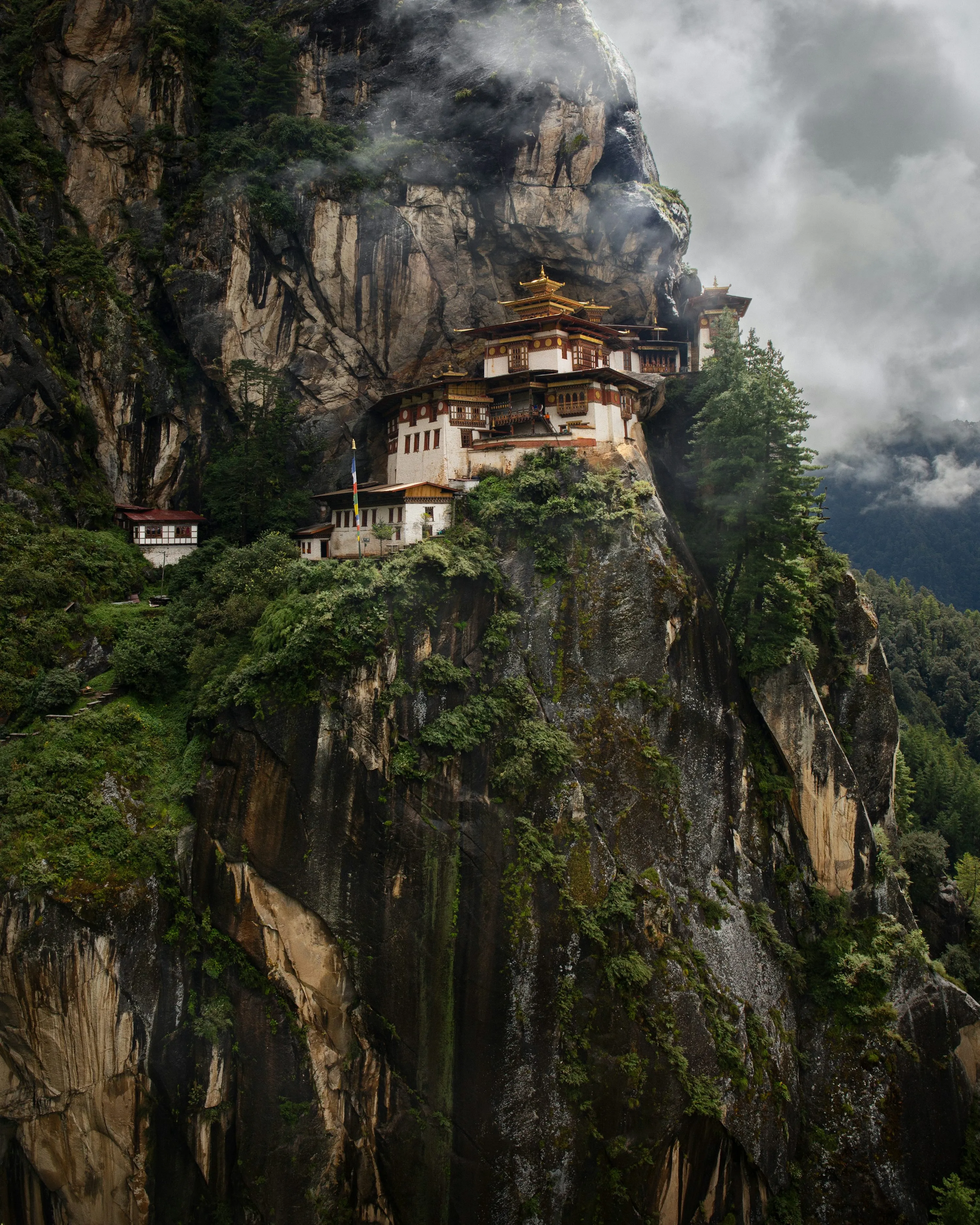
The origins of Taktshang, or Tiger’s Nest Monastery, are inseparably tied to the arrival of Guru Padmasambhava, the Indian tantric master credited with introducing Vajrayana Buddhism to Bhutan. In the mid-8th century, he is said to have flown from Tibet to Bhutan on the back of a tigress—an emanation of his consort, Yeshe Tsogyal. He landed on a sheer cliff in the upper Paro Valley and entered a cave where he meditated for three months. From this cave, later called Taktsang Senge Samdup, he subdued hostile deities and blessed the region, making it one of the holiest sites in Bhutan. Over time, hermits and practitioners began to use the cave as a retreat, and the site became an important place of pilgrimage.
Establishment of the Monastery in the 17th Century
Although venerated for centuries, the site did not have a permanent monastery until 1692. That year, during the reign of the 4th Druk Desi, Gyalse Tenzin Rabgye (1638–1696), the temple complex was formally constructed. Tenzin Rabgye was a close follower of the Drukpa Kagyu tradition and sought to consolidate important Buddhist sites across Bhutan. During a consecration ceremony at Taktsang in 1692, he declared the monastery to be one of the most sacred places in Bhutan, directly linked to Guru Padmasambhava’s legacy.
The monastery was designed to integrate with the cliffside itself, built around the caves where the Guru had meditated. Over time, additional temples and living quarters were added, including shrines dedicated to Guru Rinpoche and his various manifestations.
Fires and Reconstructions
Despite its spiritual significance, the monastery has suffered several devastating fires:
1834 Fire – A fire broke out but was relatively minor compared to later events, and the structure was repaired.
1951 Fire – Caused by electrical wiring problems, this fire destroyed parts of the main temples, requiring extensive rebuilding.
April 19, 1998 Fire – The most destructive in its history, the blaze began in one of the temples, spread rapidly, and consumed much of the complex. It destroyed priceless murals, relics, and centuries-old wooden structures. One monk died while attempting to save sacred statues.
The 1998 fire triggered a nationwide response. The Royal Government of Bhutan, under the guidance of His Majesty King Jigme Singye Wangchuck, led the restoration project. The work emphasized traditional methods and craftsmanship, ensuring authenticity. Artisans, painters, and carpenters from across Bhutan worked for years, using only traditional tools and techniques. By the early 2000s, the monastery had been fully restored, regaining its former grandeur.
Religious and Cultural Significance
Taktshang is one of thirteen “Tiger’s Nest” caves in the Himalayan world, all connected with Guru Padmasambhava’s journeys. Of these, the Paro Taktsang is considered the most important. It houses several shrines, including:
Guru Sungthuk – Dedicated to Guru Padmasambhava.
Pelphug Lhakhang – The cave temple where the Guru meditated.
Machi Lhakhang – Housing the embalmed body of Tenzin Rabgye.
Annual religious festivals (tsechus) are also performed at the site, attracting both pilgrims and tourists.
Taktshang Today
The monastery sits at 3,120 meters (10,240 feet) above sea level, about 900 meters above Paro Valley. Reaching it requires a two- to three-hour hike through pine forests, often accompanied by the scent of incense from prayer offerings along the path.
Today, Taktshang is not only Bhutan’s most iconic landmark but also a living place of worship. For Bhutanese Buddhists, it remains a vital pilgrimage site linked directly to Guru Rinpoche’s blessing of the land. For visitors from abroad, it represents the spiritual heart of Bhutan, a dramatic fusion of faith, legend, and architectural ingenuity.

Ta Dzong: Bhutan’s Timeless Watchtower Turned National Treasure
Perched high above the picturesque Paro Valley, the Ta Dzong stands as a sentinel of history and culture, a fortress turned museum that invites visitors to step back in time. With its distinctive circular design and commanding views, Ta Dzong was originally built in 1649 by Tenzin Drukdra, Bhutan’s second Desi, to guard the valley and the majestic Paro Dzong from invaders. Its thick stone walls, narrow windows, and towering presence tell tales of vigilance, strategy, and the ancient art of defense.
But Ta Dzong is more than just a watchtower. In 1968, it was transformed into the National Museum of Bhutan, a sanctuary for the nation’s rich cultural heritage. Today, it houses an incredible collection that spans centuries, inviting visitors on a journey through Bhutanese history, spirituality, and artistry.
Step inside, and you’ll be greeted by:
Vibrant Thangkas that narrate Buddhist myths with intricate brushwork.
Bronze and gilded statues of Buddhas and Bodhisattvas radiating serenity.
Ceremonial textiles and costumes reflecting Bhutan’s unique craftsmanship.
Historic weapons and armor, remnants of the valley’s days of defense.
Sacred manuscripts and ritual objects, echoing the spiritual heartbeat of Bhutan.
Every corner of Ta Dzong whispers a story—of devotion, artistry, and the indomitable spirit of a nation fiercely protective of its heritage. And beyond the walls, the panoramic views of Paro town and the magnificent Paro Dzong create a breathtaking backdrop, making a visit here both a cultural and visual feast.
Ta Dzong isn’t just a museum—it’s a bridge between the past and the present, a living testimony to Bhutan’s identity, traditions, and resilience. For travelers and culture enthusiasts alike, it’s an unmissable chapter in the story of Bhutan.

Rinpung Dzong, often called Paro Dzong sits like a pale jewel on a rocky promontory above the Paro River. Its name, commonly translated as “Fortress on a Heap of Jewels,” hints at both spiritual and strategic value: it is at once a sacred monastery and the historic administrative heart of Paro.
History and architecture
The present dzong complex dates to the mid-17th century, when Zhabdrung Ngawang Namgyal, the unifier of Bhutan, ordered construction (commonly dated to the 1640s) to consolidate religious and civil authority in the valley. The site, however, had earlier religious associations: local histories say Guru Rinpoche (Padmasambhava) blessed the rock below the dzong centuries earlier, and a smaller religious structure existed there before it was expanded into the great fortress-monastery it is today. The building exemplifies classic dzong architecture which is massive inward-sloping walls, courtyards, temples, and a central utse (tower) arranged to serve both defense and monastic life.
Spiritual and civic significance
Rinpung Dzong is home to the district’s monastic body (the monk community) and the administrative offices for Paro Dzongkhag, reflecting the traditional Bhutanese fusion of spiritual and temporal rule. Over centuries it has hosted important state ceremonies and, at times, national assemblies. Its role in daily religious life is visible in the rhythm of pujas (ritual prayers), daily butter-lamp offerings, and the supervision of monastic discipline.
Festivals and sacred acts
The Paro Tsechu, the colourful annual masked festival held in the dzong courtyards — is one of Bhutan’s most beloved tsechus. During the festival, masked cham dances and consecration rituals reenact Buddhist teachings and local histories, drawing villagers and pilgrims from across the valley. The dzong also hosts seasonal rites important to local agricultural and spiritual calendars.
Rinpung Dzong remains a living monument: repaired after periodic earthquakes and fires, it is on Bhutan’s tentative list for UNESCO recognition for its cultural and architectural value. For visitors and Bhutanese alike, it stands as a tangible link between the country’s spiritual heritage and its historical governance — a fortress that still shelters prayers as well as people.